
As South Africa continues to rebuild and strengthen its manufacturing sector, one principle is becoming increasingly clear: responsible manufacturing must include responsible end-of-life management of products and components.
Electronic waste - commonly referred to as e-waste - is one of the fastest-growing waste streams in the world. From lighting components and batteries to electronic equipment and industrial control systems, modern manufacturing inevitably produces materials that eventually reach the end of their usable life. Managing this waste responsibly is no longer optional; it is both a regulatory requirement and a moral responsibility for manufacturers.
This is where organisations like EWaste Africa play a critical role in South Africa’s sustainability ecosystem.
The Growing Importance of E-Waste Compliance
South Africa has implemented increasingly strict waste management regulations, including Extended Producer Responsibility (EPR) rules that require businesses to take responsibility for the lifecycle of their products. These regulations govern how electronic waste is collected, transported, stored and recycled.
E-waste cannot simply be discarded with general waste. Since 2021, electronic waste has been banned from landfills in South Africa, meaning manufacturers and businesses must ensure that their electronic and lighting waste is handled through approved recycling channels.
Failure to comply can result in regulatory penalties and reputational damage, but more importantly, it contributes to environmental harm and the loss of valuable recyclable materials.
For manufacturers committed to building a strong and responsible South African industrial base, compliance is not just about regulation — it is about leadership.
The Role of EWaste Africa
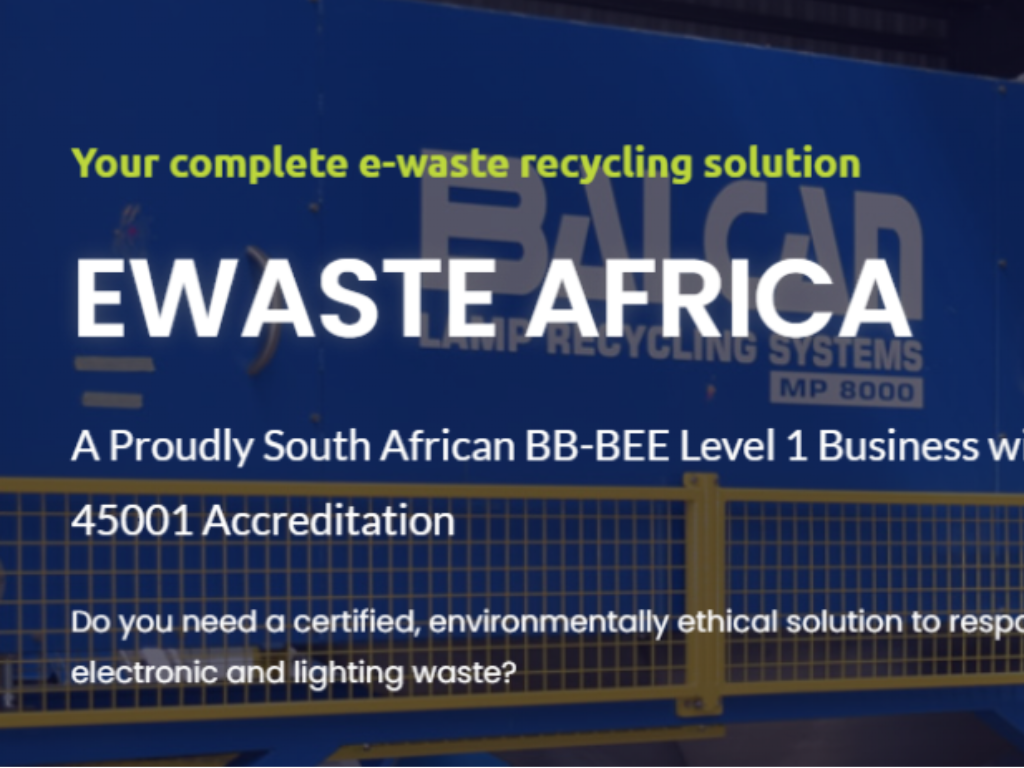
EWaste Africa is a South African electronic and lighting waste recycling organisation dedicated to keeping hazardous waste out of landfills while turning waste challenges into sustainable opportunities.
The organisation provides a range of services designed to help companies manage e-waste responsibly, including:
- Collection and logistics for electronic waste
- Secure storage solutions for hazardous electronic materials
- Environmentally responsible recycling and beneficiation
- Compliance support for businesses navigating waste regulations
With hundreds of corporate clients and a growing network of collection points, EWaste Africa has made it easier for organisations to participate in the circular economy and reduce their environmental impact.
Supporting a Circular Manufacturing Economy
Manufacturing and sustainability should not be seen as opposing forces. In fact, the future of industrial development lies in circular manufacturing systems, where materials are reused, recycled and reintegrated into production processes.
Properly managed e-waste contains valuable resources such as copper, aluminium and rare earth metals that can be recovered and reintroduced into the economy rather than lost in landfill sites.
By partnering with organisations like EWaste Africa, South African manufacturers can:
- Reduce environmental impact
- Ensure compliance with national waste regulations
- Strengthen sustainable manufacturing practices
- Support local recycling industries and job creation
Responsible waste management also strengthens the reputation of South African manufacturing globally. As international markets increasingly demand environmentally responsible supply chains, companies that implement strong sustainability practices gain a competitive advantage.
A Call to South African Manufacturers
At Manufactured in South Africa, we believe that growing local manufacturing goes hand-in-hand with protecting our environment and building sustainable industrial systems.
South African manufacturers should actively seek partnerships with organisations such as EWaste Africa to ensure their electronic and lighting waste is handled responsibly, legally and sustainably.
By doing so, manufacturers not only protect the environment - they help build a stronger, cleaner and more competitive manufacturing sector for South Africa.
Responsible manufacturing is not just about what we produce.
It is also about how we manage what remains when a product reaches the end of its life.